>

Tuesday, 4 September 2012

Merdeka Day Malaysia

Independence is a man’s birthright. The joy of being independent from subjugation is the greatest happiness known to man. The independence day of a country definitely calls for celebration. The Merdeka Day  (independence day) of Malaysia is likewise celebrated all over this beautiful Asian country.

Having earned independence from the British on 31st August, 1957, the Merdeka Day is commemorated as the National Day. With a holiday declared all over Malaysia, the streets everywhere turn into carnival venues with foot tapping music accompanied by joyous dances. The streets get overcrowded with people and car horns hoot aloud commemorating this red-letter day in the history of Malaysia. 
The Jalur Gemilang (Malaysia’s National Flag) is hoisted at night. The 14 horizontal red and white stripes in this flag represent 13 states with their independent federal governments. This flag hoisting ceremony is cheered aloud by the Malays. People all over Malaysia roar ‘Merdeka’. The night sky becomes illuminated with constant bursting and the deafening sound of fire crackers. 
A parade is organized on this day, which is honored by the presence of the king, the queen, the prime minister of Malaysia as well as other very important dignitaries. Sometimes important foreign political personalities also attend the Merdeka Day parade. 

The two most important words -- "Thank you!"

Sunday, 2 September 2012

Jalur Gemilang

                                          Malaysian Flag
                                      (To know Malaysia is to love Malaysia)


The flag of Malaysia is a combination of traditional Islamic symbols and the representation of all the states under the federation. The 14 stripes and 14 points of the star represent the equal status of the 14 member states, namely Johor, Kedah, Kelantan, Melaka, Negeri Sembilan, Pahang, Pulau Pinang, Perak, Perlis, Sabah, Sarawak, Selangor and Terengganu in the Federal Government.

- The colour red signifies strength, bravery and courage in facing challenges.

- The colour white symbolises honesty and integrity.

- The dark blue canton represents the unity and harmony of the peoples of Malaysia.

- The crescent represents Islam as the dominant religion.

- The 14-pointed star symbolises the unity of the 13 states with the Federal Government.

- The yellow colour of the crescent and star is the royal colour of the Rulers.


WHY "JALUR GEMILANG"?

Jalur (pronounced jah-loor) – A Malay word meaning a band or stripe of colour. The 14 parallel red and white stripes symbolise a common mission, a common direction and a virtuous path followed by the peoples of all states regardless of creed, race and religion.

Gemilang (pronounced guh-mee-lung) – A Malay word meaning bright, brilliant, resplendent or excellent.

Jalur Gemilang represents the excellence of the peoples and the nation of Malaysia in every field, be it at national or international level. Jalur Gemilang symbolises a nation and peoples who are hard-working, patriotic, strong, courageous and prepared to sacrifice for the race, nation and religion.

The two most important words -- "Thank you!"

Saturday, 1 September 2012


Negaraku (My Country) is what we have been taught to memorize from our first day in school and that’s the title of my work. This is the one song that every Malaysian has sung at some point and the words remain with us throughout our lives.

Malaysians are unique in language and personality. Yet we share a multi-cultural society. We are part of the whole called Negaraku. Like pieces of a jigsaw puzzle, we each have a role to play in making Malaysia what it is.

We are 52 today. We’ve had glorious years of growth. As we age, we are challenged by new thoughts and ideals that echo in our conscience.

Who exactly are we? Are we moving in the right direction? Are we taking the right steps to get there? Do shouts of Malaysia Boleh (Malaysia Can!) mean anything? Are we a more harmonious society than we were half a century ago? And in 50 years time, will we still be asking these same questions?

The two most important words -- "Thank you!"

Friday, 31 August 2012

Let’s cry out Merdeka!


TODAY is our National Day, even for Sarawak although it actually gained independence from the British on July 22, 1963.
But somehow calling Aug 31 just our National Day belies the importance of that date since it is, for all intents and purposes, our Independence Day.
While the peninsula or Malaya obtained independence from the British on that day in 1957, Sabah also gained independence on the same date but six years later.
Proud to be Malaysians: Let’s stand together and celebrate the 55th anniversary of our country’s independence.
Anyhow, as an independent nation, we are celebrating our 55th anniversary today and on Sept 16 we will celebrate our 49th anniversary of the formation of Malaysia when Sabah and Sarawak joined the federation.
This means we have 15 days to celebrate the formation of Malaysia.
It cannot be denied that this year’s run-up to Hari Merdeka seemed rather muted and not as grand as previous times. It could be because it comes so soon after Hari Raya Aidil Fitri with most of us still recovering from the long holidays.
“It’s celebration fatigue,” said a colleague when asked about the rather quiet Merdeka.
However, I suspect, and many of you will agree, that this year’s anniversary is deafeningly silent because we have become so divided and everything has become so politicised that we have nothing to celebrate.
Or worse, many of us have become afraid to celebrate.
Have we become afraid to show our patriotism because we are afraid to be criticised? Have we become afraid to show our pride and joy in being Malaysian because we are constantly told that there’s nothing to celebrate?
Or could it be that we have become so disillusioned about being a Malaysian?
I believe that the country is now at a serious crossroads and this is a situation we have never been in before, not even in the dark days of the Emergency or May 13.
In 1969, we were 12 years old as an independent nation and less than six as a country.
History will show that the country came to its own after those dark days because most people wanted to recover from the hatred and distrust sown by the clashes after the general election.
Many people would like to draw parallels between what happened in 1969 to what happened in 2008 and in both times the ruling coalition did very badly for the dull feeling over the National Day.
There are also those trying to use what happened in the May 13 incident to cast fear among the masses with the coming of GE 13.
But this can’t be further from the truth as we are nowhere as hungry as our fathers and grandfathers were in 1969 in wanting to be Malaysians.
Yes, some left the country for Australia and England, citing discrimination, but many more stayed back to fight for their place under the Malaysian sun and when the boom time of the country came in the 1980s and 1990s, most of them reaped the rewards of being Malaysians.
Many of the present day millionaires, and even some billionaires, owe their fortunes to that boom time.
Yes, some of these people did not deserve the money they have, but no one can deny that all of us worked very hard in those two decades.
We are not only a young country (55 is just a toddler as far as nations go) but also a rather small one. All it takes for us to prosper is for slightly more than half of us to work hard. In the same vein, all it will take for us to fail is for slightly more than half of us to be slackers.
But sadly, now in 2012, we have become a nation of moaners and groaners. Instead of being proactive, we enjoy taking to the Internet to grumble and complain about everything – from our mothers, fathers, siblings, bosses and colleagues to our whole country.
Of course, we can now complain very loudly because we have the tools to do so but that does not mean that we do not want to work hard at making our nation work.
We should not allow all the complaining to distract us from the fact that we still need to work very hard to make Malaysia progress.
And we should also not be clouded by our complaints until we do not celebrate ALL our achievements. The right to complain does not mean there are no reasons to celebrate.
We should celebrate that we are still Malaysians.
We should celebrate that we like each other’s food.
We should celebrate that we have done well in the past 55 years.
We should celebrate that we can do even better in the next 55 years.
We should celebrate that we have the right in the coming general election to choose who we want to represent us.
We should celebrate because we can

The two most important words -- "Thank you!"

Tuesday, 28 August 2012

POMMM !


The two most important words -- "Thank you!"

Monday, 20 August 2012

Dyla's Family

Eid is a celebration for muslims to celebrate
Eid is time to say Eid morak and pray
Some muslims give money to their children and say Eid mobarak.
Some muslims go to their friend and neigbours.
Some people give money to other children,
they don't just give money to their own children,
they give money to their friend's children or to their neigbours children.
They can also give money to adults.
Eid mubarak, Eid mobarak to you all my bothers and sisters.
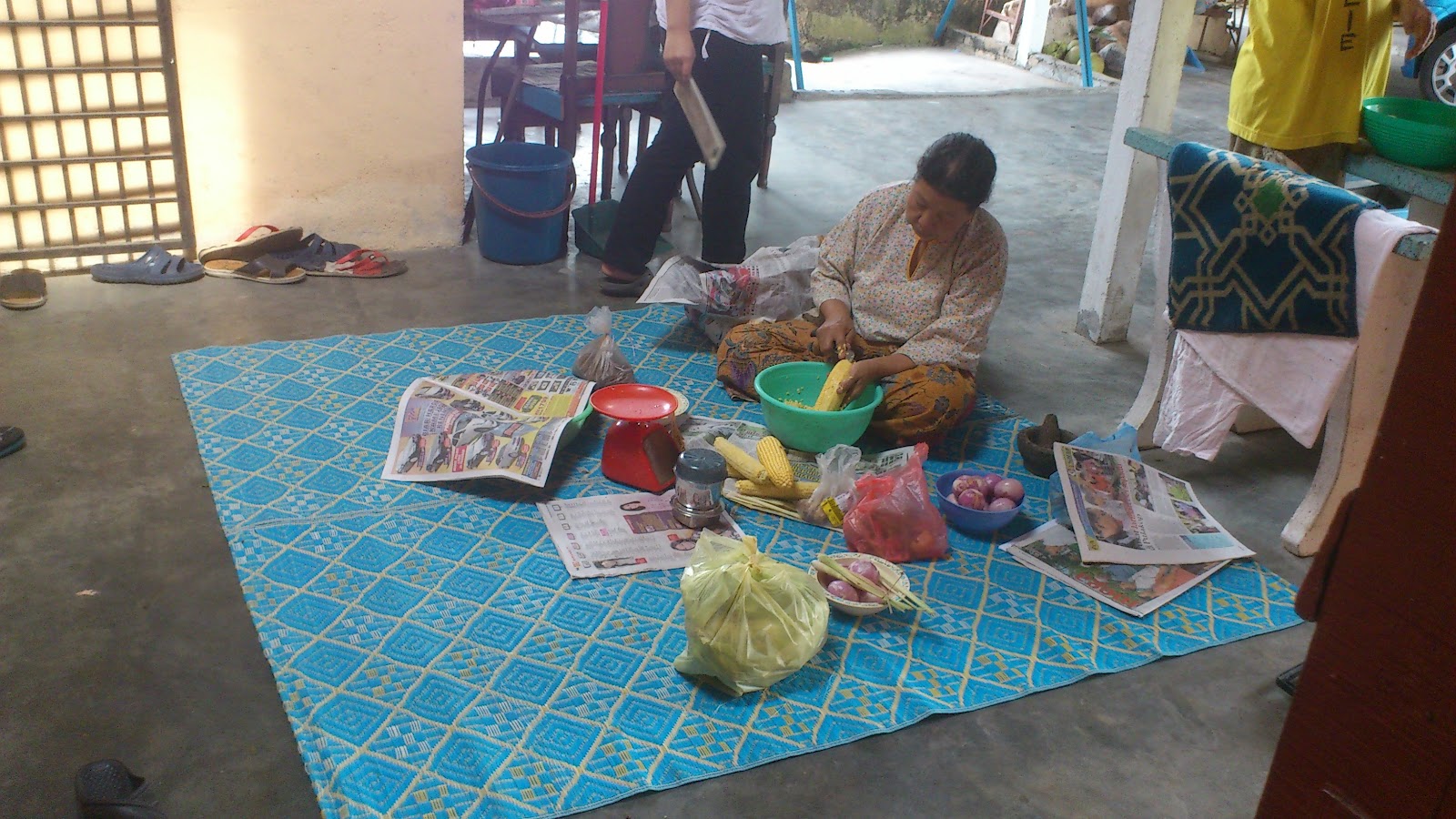
Rendang has be prepared as compulsory rations when Eid Fitr 
Dyla's grandmother makes a cookies .
The food that have be prepared in morning of Eid Fitr


The two most important words -- "Thank you!"

Sunday, 19 August 2012

Annouce of Eid


Eid ul Fitr is the month-long fast of The Month of Ramadhaan is over and 1st Shawwal is 'Eid Day. It is a day of joy, bonding, helping one another and spreading happiness all over the globe: "...Alladhi ja'altahu lil Musilimina 'Eida". However, the purpose of 'Eid is deeper than mere celebrations and relaxation. Lexically, eid in Arabic is derived from awd i.e. to return or recur. Thus, in the past when an afflicted community found relief and erstwhile prosperity and comfort returned, that occasion was called 'eid. In Al-Islam, after the month long fast and at the end of Hajj the human soul returns to its pristine state of cleanliness and purity; hence the celebrations of 'Eid al-Fitr and Eid al-Hajj.

The two most important words -- "Thank you!"